


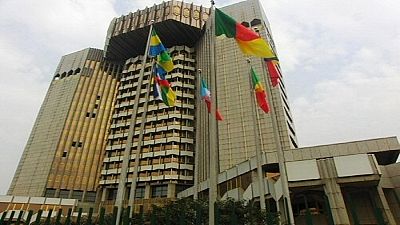

Economic crisis
Countries of the Central African Economic and Monetary Community (CEMAC) are facing economic turbulence.
This was the conclusion by officials of the International Monetary Fund (IMF) following a 2-week visit to Libreville, Gabon and Yaounde in Cameroon.
According to the IMF, the CEMAC region has been severely hit by the twin shocks of lower oil prices and security issues.
In terms of security, the fund said the cost of fighting against Boko Haram has weighed heavily on the region in particular Chad and Cameroon.
The IMF estimates that the fight against terror cost about 2% of Cameroon’s GDP. The security challenges also extend to the Central African Republic that has witnessed instability in the recent past.
Consequently, IMF estimates that regional economic growth slowed to 1.7 percent in 2015 and the continued low oil prices will contribute to keeping growth at about 2% in 2016. Inflation will remain subdued and stay below 3% in the medium term.
“The regional fiscal and current account deficits widened in 2015 and are expected to remain high in 2016. With the value of oil exports contracting by about one third, the regional fiscal and current account deficits increased to about 7 and 9 percent of GDP in 2015, respectively. Both deficits are projected to reach to 8 percent of GDP in 2016, as a result of continued low oil prices and high fiscal expenditure,” IMF said in a statement.
Faced with bleak economic prospects, countries of the CEMAC region turned to the Bank of the Central African States (BEAC), the regional central bank, to help finance their fiscal deficits.
The bank recorded a profit of 160.7 billion CFA about 244 million euros in 2015.
The IMF has warned that the resulting accommodative monetary policy by the bank led to a loss in reserves and has put forward a set of recommendations which include; fiscal consolidation to maintain macro economic stability, strengthening of deeper regional ties to help the region’s weather negative shocks, mobilization of internal resources and debt control.
To reduce the region’s dependence on oil, structural measures at the national and regional levels will be necessary to create a conducive environment for the private sector becoming the engine of growth.
The fund is expected to discuss the report of the regional consultation in July this year.
IMF


00:54
Spanish police evict hundreds of mostly illegal migrants living in a squat
01:06
Trump administration expands U.S. travel ban to five more countries
00:54
Massive blackout plunges western Cuba into darkness as power grid struggles
01:11
Malaria deaths, cases surged in 2024 with gains at stake - Report
00:00
Pope Leo says he hopes to visit Africa in 2026 as he wraps up his first foreign trip
01:09
UNAIDS urges global unity in World AIDS Day call to action